Two more fintech deals target UAE market
Dec 11, 2024


Near Field Communication (NFC), the promising mobile (m)-payment technology, has not created the revenue-generating opportunities the telecom industry expected...
Near Field Communication (NFC), the promising mobile (m)-payment technology, has not created the revenue-generating opportunities the telecom industry expected. New marketing strategies are crucial to accelerate wide consumer adoption, according to Frost & Sullivan. Recently established partnerships between telecom operators and major financial institutions too are an effective way to deploy m-payment offerings.
“The industry seems to be reaching a tipping point,” says Jean-Noel Georges, Global Program Director for ICT in Financial Services at Frost & Sullivan. “A number of factors like more NFC-ready mobile devices and new market participants are favouring the development of the European m-payments market — especially NFC-based payments. Market players are forging cooperation, where a telecom-financial services partnership is one of the most compelling strategies.”
Component vendors, mobile device manufacturers, and mobile operators have plans for introducing more NFC-enabled mobile devices to the market. Moreover, the m-payments sector is becoming more dynamic with the entrance of software providers, payment platform providers, and over-the-top companies such as Google.
“The entrance of new market participants has had a twofold effect,” comments Mr. Georges. “It constituted a first step in modifying the market’s structure with innovative and disruptive technologies and business models, and it incentivised financial institutions and mobile operators to push ahead with strategies for m-payments or risk being left out.”
PayPal’s entrance into the m-payments market is a noteworthy example, from Frost & Sullivan’s perspective. The cornerstone of PayPal’s offerings, which include m-payments, is to bring together the online and offline payment worlds. Closing the gap between online and offline commerce is not only attractive from a business standpoint but also a compelling value proposition to end users. After PayPal launched its digital wallet, major payment schemes launched similar services.
Starting this year, companies involved in the m-payment market have demonstrated a marked changed in their strategies for commercial NFC rollout. Market participants are forming partnerships that will accelerate the deployment of m-payment offerings.
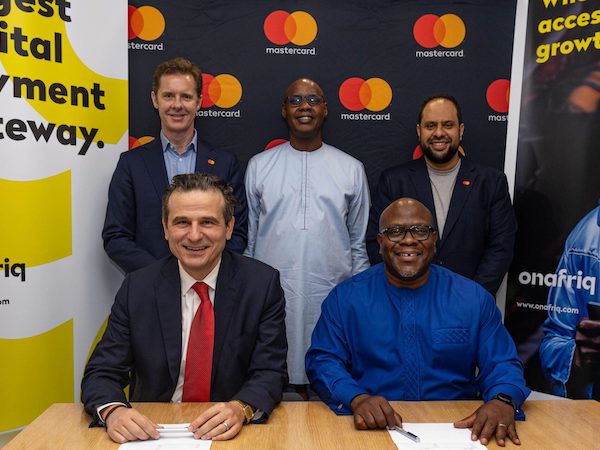
Last month, DT and MasterCard signed a partnership agreement to bring m-payments to DT’s 93 million customers in Europe. DT will issue MasterCard’s branded products through its subsidiary ClickandBuy, which owns an e-money license. The partnership envisions the launch of m-wallet service in Poland during the second half of this year, followed by the launch of the m-wallet in Germany during the first half of 2013.
“DT was wise to select Poland – where 20 percent of Point-of-Sale terminals are contactless enabled and that percentage is expected to increase to 40 to 50 percent by the end of 2013 – as the initial focus of its wallet,” notes Jean-Noel Georges.
“This type of partnership is cost-effective: the partners involved avoid ‘reinventing the wheel’ by using the capabilities and know-how of their counterparts, which may result in a compelling offering,” advices Jean-Noel Georges. “More importantly, telecom-financial services partnerships deliver a positive signal to the market: different industries are finally finding a way to promote a payment solution. This market is steadily moving towards maturity through partnerships and merger and acquisition activity.”